KolWrite Research Desk

Speech, language, and the work after the transcript.

Evidence-led explanations of speech recognition, multilingual audio, accessibility, and the decisions that turn a recording into dependable text.

Research and practical guides

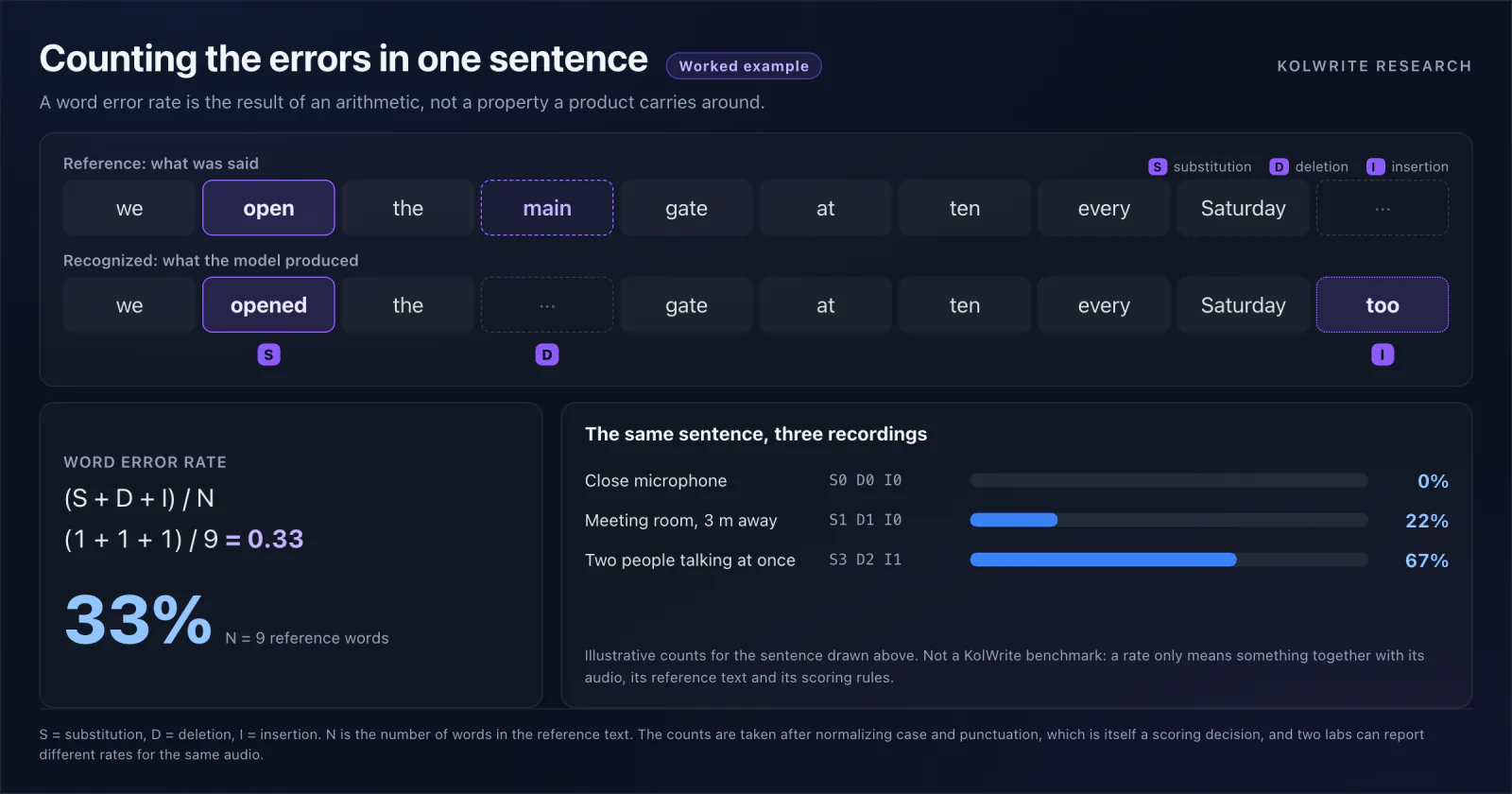
A worked example of counting transcription errors: a human reference line sits above the machine output, with one substituted word, one deleted word and one inserted word marked, and the three counts divided by the number of reference words.

Evaluation

Accuracy is not one number

Word error rate is a real measurement, and it is easy to quote without its conditions. A transcript can score well and still fail the job you bought it for. Here is what the number counts, and what we measure instead.

5 min read
Read article
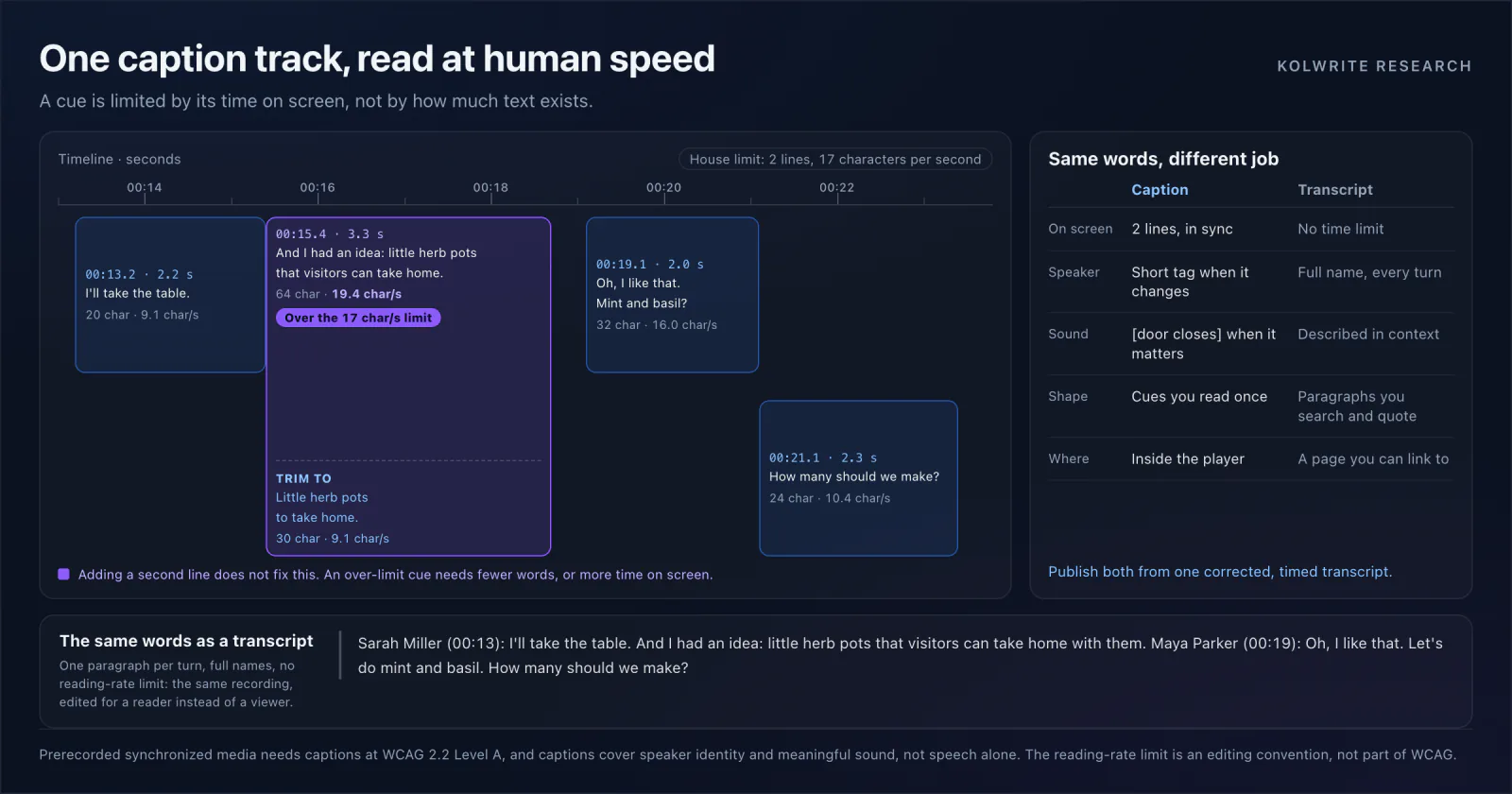
A caption timeline: each caption is drawn across the time it stays on screen, next to the time a viewer needs to read it, and one over-long caption is flagged beside a shortened version that fits its slot.

Accessibility

Captions are part of the content

A transcript, a translated subtitle track and a caption file can hold the same words and do three different jobs. Here is what each one is for, what the standard asks, and what we check before publishing.

5 min read
Read article

How we publish

KolWrite builds transcription software. Product links are clearly marked; sources are selected for relevance, not because they mention KolWrite.

  1. We prefer papers, standards bodies, and first-party technical documentation over recycled claims.
  2. A benchmark is reported with its conditions. We do not turn one test file into a universal accuracy promise.
  3. KolWrite is identified when it is the product being discussed; editorial explanation is not disguised as an independent ranking.
  4. Material changes update the visible revision date and the structured article record.