The short version
- Transcripts capture everything spoken, minutes log decisions and tasks, and notes keep whatever the writer found helpful.
- A transcript gives you the whole conversation, which makes it long. Treat it as raw source material rather than the final readout.
- Minutes serve as the formal, approved record. Instead of retelling the conversation, they stick to a short, neutral, and fixed format.
- Working notes and summaries are informal tools for your team, so don't treat them as the official record.
- You can pull all three documents from one recording, as long as you tailor each to its reader and check it before sending.
What is the difference between notes, minutes, and a transcript?
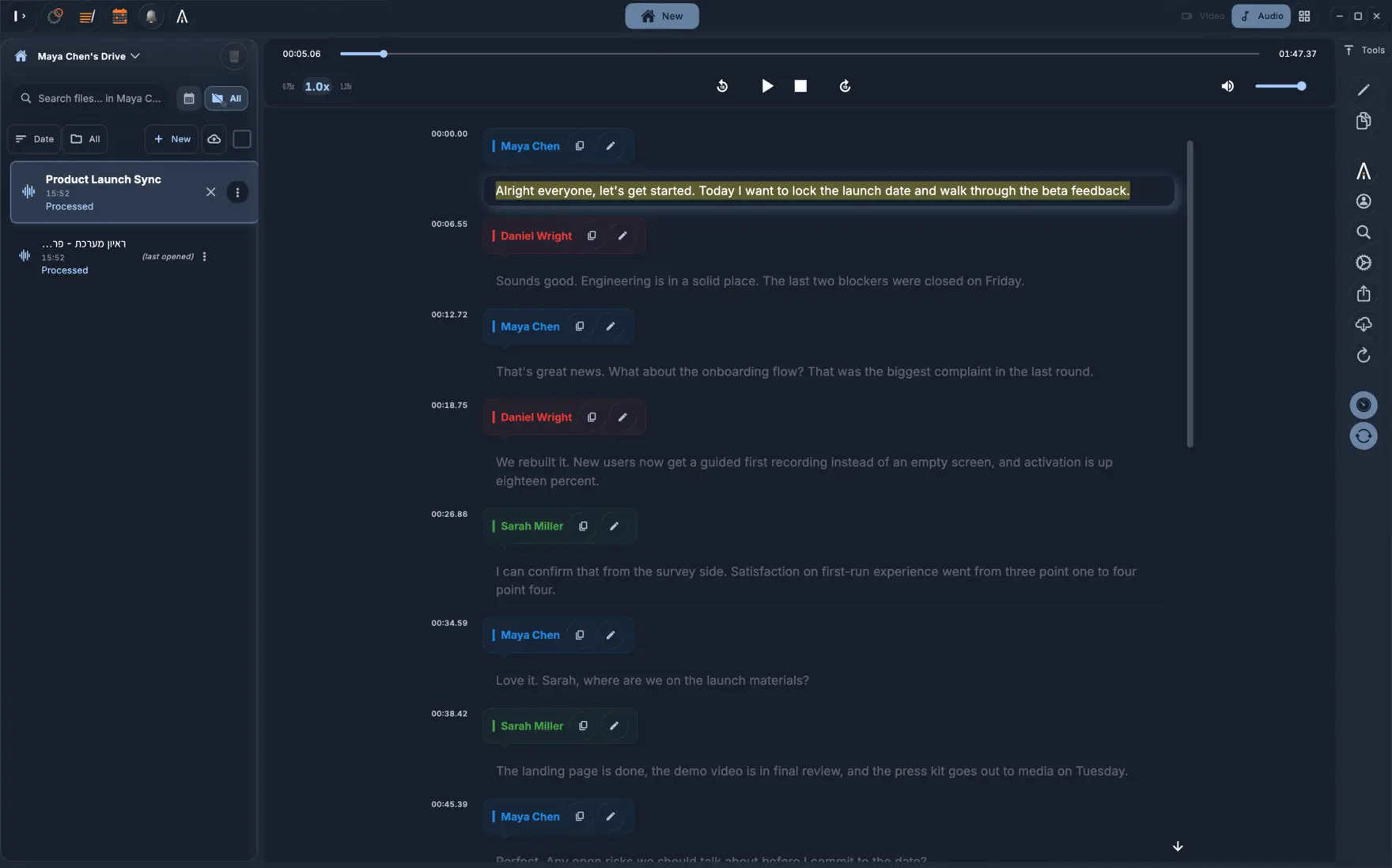
A transcript is a word-for-word log of the conversation, usually labeled with speakers and timestamps. It doesn't filter out unimportant parts. Because a one-hour meeting turns into pages of text, most people never need to read a transcript all the way through.
Minutes are the official record of a meeting. They list who was there, briefly cover the discussion, log the decisions, and assign tasks. Written in a neutral tone and a fixed format, they normally get approved at the following meeting. Good minutes skip the back-and-forth of the conversation and fit onto one or two pages.
Notes are just what one person chose to jot down in their own words. A summary is similar, offering a quick recap for people who missed the call. Both are handy for daily work, though neither counts as formal minutes.
When do you need a full transcript?
Pull a transcript whenever exact phrasing matters. That might be a disputed commitment, a quote you plan to publish, or a technical explanation you want to read over again. You also need one for research interviews, hearings, and internal investigations. In all these situations, you care about the exact words someone used rather than the general topic of the meeting.
You can also use the transcript as raw material to build your other documents. When you pull summaries, minutes, and action items from it, you can tie each point back to a specific timestamp in the audio, making it easy to verify.
Because a transcript catches every offhand comment, treat it as sensitive. Decide who actually needs access instead of sending it to everyone by default.
When do you need formal minutes?
Minutes are for meetings where decisions have to stay on record so people can rely on them later. That includes boards, committees, an association's general assembly, steering groups, parent committees, and standing working groups. Whether you need minutes and what they have to cover depends on the type of body, its governing documents, and the law. Since rules vary, ask a lawyer or the body's secretary what applies.
Most minutes follow the same layout. You list the date, time, and location, followed by who attended and who sent apologies. Then you go through the agenda items, noting a quick summary of the discussion, the agreed decision in its exact wording, and any votes or objections. Finally, you log action items with their owners and deadlines, the time of the next meeting, and who took the minutes.
Until the group approves the minutes, usually at the next meeting after fixing any points people object to, you only have a draft. Approval is what makes them the official record.
When are notes or a summary enough?
A quick summary listing decisions and next steps is plenty for most day-to-day calls, like weekly syncs, project check-ins, supplier calls, or brainstorming sessions. People just need to know what they are doing next, without the overhead of an official record.
Write your summary for a coworker opening it on Thursday morning after forgetting everything from Tuesday's call. Lead with the decisions, follow with assigned tasks and due dates, and put open questions at the bottom. If someone has to scroll past one screen to read it, it's too long to be a summary.
How do you produce all three from one recording?
First, let everyone know you are recording, then capture the audio and transcribe it with speaker names and timestamps. With KolWrite, you just upload the audio file and no bot joins your call. It gives you a timestamped transcript with speaker labels, plus an editable summary and action items that export straight to Word or PDF.
Next, write each record for the people who will read it. Send the team a summary that same day. When you need a formal record, draft the minutes from the transcript using the body's usual structure, and check them against the recording before sending them for approval. If someone needs the exact wording, be careful about how you share the transcript.
Always check the output yourself. Automatic transcription makes mistakes, so when you draft minutes from it, verify the decisions, names, numbers, and dates against the audio line by line. Checking a draft is still much faster than starting from scratch, and it shows much more care than sending out a first draft.
What are the common mistakes?
Sending a raw transcript when people only wanted a summary is a classic mistake; no one wants to hunt through pages of text for one decision, so they just give up. Another mistake is labeling a casual summary as minutes. If you might need to rely on a record later, it needs formal approval that a quick recap doesn't have.
People also trip up by turning minutes into a play-by-play story, when they should only log outcomes instead of who said what and how they sounded. Finally, don't rush to delete the audio right after finishing the minutes. You and your organization should consciously decide whether and how long to keep recordings, factoring in the law and the people on the call.
Common questions
Is a transcript the same as minutes?
No. A transcript is a word-for-word log of everything spoken, while minutes are a short, formal record of who attended, what was discussed, and what was decided and assigned, usually approved by the group.
Can I use an automatic transcript as the official record?
Only if your rules allow it and someone has checked it against the recording first. Automated text has mistakes, so ask your adviser what applies to your organization.
What should minutes include?
List the date, location, and attendees, then cover each agenda item with a brief recap of the discussion, the decisions made, and any tasks with their owners and deadlines. Finish with the time of the next meeting, and keep the writing neutral.
Do all meetings need minutes?
No. A short summary is enough for many working meetings. Boards, committees, and similar bodies often need formal minutes, depending on their governing rules and the law.
How long should I keep a meeting recording?
It depends on your organization's rules, the law, and what the people on the call agreed to. There is no universal timeline, so make a conscious decision and put your policy in writing.