The short version
- Transcribe the Arabic audio first, fix the transcript, and translate from that corrected text. One wrong Arabic word can turn into a Hebrew sentence that reads smoothly but is inaccurate.
- Decide early whether the Hebrew should match the spoken dialect and tone or stick to a neutral written style, then apply that choice consistently.
- There is no single standard way to write Arabic names in Hebrew letters. Pick one spelling per person and use it everywhere.
- Double-check numerals, month names, and dates, since written Arabic uses more than one system for them.
- Treat the translated Hebrew as a draft. Official, legal, or medical files need a qualified human translator.
What is the right order of steps?
Work in four steps: transcribe the Arabic, fix the transcript, translate it into Hebrew, and review the Hebrew. People often skip fixing the Arabic text, even though that is the easiest stage to catch mistakes because you are comparing the words directly against the audio in the same language.
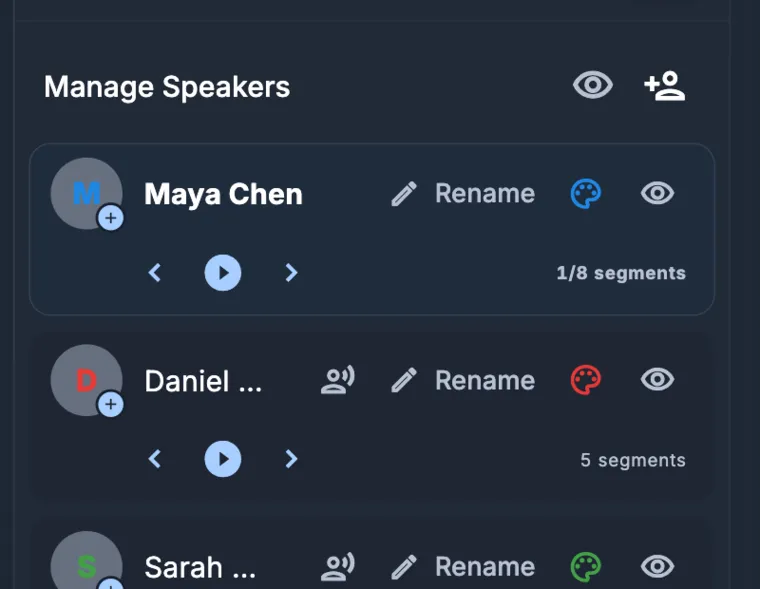
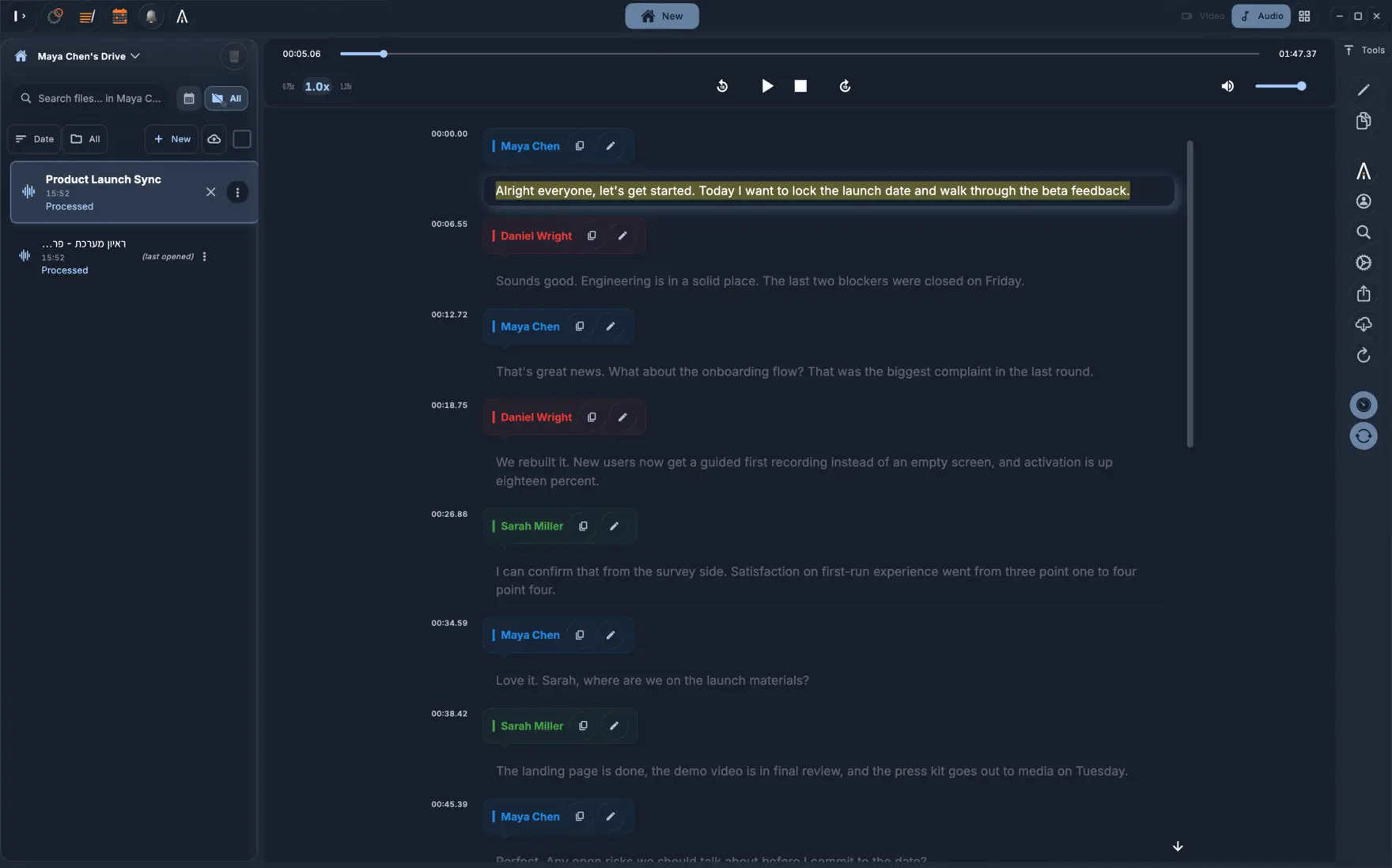
In KolWrite, upload your recording and go through the Arabic transcript with its speaker labels and timestamps. Fix any names and numbers before translating the text into Hebrew. KolWrite keeps the speaker labels and timing attached to the translated lines, so you can export the finished Hebrew as a document or as subtitles.
Does dialect change the translation?
Yes. People usually speak in local dialects rather than Modern Standard Arabic, and regional words can trip up outsiders. Speakers in the Galilee, Cairo, and the Gulf may phrase the exact same idea in different ways. Read through the Arabic transcript before you translate and flag any words you are unsure about. If you do not know the dialect yourself, ask someone who speaks it.
You also need to pick the right register in Hebrew. Everyday Hebrew works well for a faithful translation of a casual chat, while reports, meeting minutes, and subtitles for a general audience usually read better in a neutral style. Going too casual can come across as disrespectful, and going too formal can sound stiff and distant. Pick your approach at the beginning and write it down for anyone else reviewing the file.
How do you write Arabic names and places in Hebrew?
Arabic has pharyngeal and emphatic consonants that do not map neatly onto the Hebrew alphabet. Hebrew writers use standard workarounds, like adding a geresh mark for the first sound in a name like Jamal, but people do not all follow the same rules. One name can have several reasonable Hebrew spellings.
Pick one spelling for each person, organization, and place. If you are publishing the text, ask the people involved how they spell their own names in Hebrew. For official records, copy the exact spelling from their identity documents. Keeping the spelling consistent makes the file searchable and stops one person from looking like two different people.
How do you handle numbers, months and dates?
Written Arabic may use either Western digits or Eastern Arabic digits, and a single transcript sometimes mixes the two. Hebrew uses Western digits. Put all numbers into one system and check every figure against the audio. Be especially careful with large amounts and decimals, since a misplaced comma or decimal point can change a value by a factor of a thousand.
Month names also change from place to place. In the Levant, the Gregorian months have their own local names, whereas Egypt and North Africa use names that sound like the international ones. Speakers might also give dates from the Hebrew or Hijri calendars. Write every date in one clear format, and note which calendar is meant whenever it makes a difference.
What can go wrong between two related languages?
Because the two languages are closely related, it is easy to get overconfident. Plenty of words share a root and sound almost the same, but their meanings have drifted apart over time. If you go by how a word sounds, you can easily pick a Hebrew word that reads naturally while meaning something else entirely. Whenever a match feels too obvious, double-check what the word actually means in context.
Politeness formulas, religious expressions, and proverbs take extra care too. A common Arabic greeting or blessing may have no neutral match in Hebrew, and translating it word for word can change the tone. Depending on what your audience needs, decide whether to translate the phrase, keep it in transliteration with a short note, or leave it out.
Grammatical gender and number also work differently between the two languages, especially when someone is speaking directly to another person. Check those lines closely whenever you can tell from the audio who is talking to whom.
How do you review the Hebrew before it is used?
Ask someone who reads both languages to check the Hebrew against the Arabic transcript, and to listen to the audio for a sample of lines. They should make sure nothing was left out or added, and verify that every name, number, and date matches. Keep the Arabic transcript next to the Hebrew so anyone can trace a questionable line back to the original wording.
If you are making subtitles, trim the Hebrew lines so they fit on screen, then export an SRT or VTT file or burn the captions straight into the video. For official, legal, medical, or contractual work, have a qualified human translator prepare the final text, since automated output can contain mistakes.
Write down your decisions as you go: how you spelled each name, what Hebrew register you chose, and how you handled greetings and blessings. A short style note helps keep the next recording in a series consistent and lets a second reviewer follow the same rules.
Common questions
Can KolWrite translate Arabic audio into Hebrew?
Yes. KolWrite transcribes Arabic recordings and translates between supported languages, including Arabic to Hebrew, while keeping speaker labels and timestamps in place. Always check the translated text before you share it.
Should I fix the Arabic transcript before translating?
Yes. Fixing the Arabic transcript first is the easiest way to spot errors and stops them from carrying over into the Hebrew.
Will a dialect be translated correctly?
That depends on the dialect, the speaker, and how clear the recording is. Flag any words you do not recognize, have someone who speaks the dialect check them, and pick a suitable Hebrew register.
How should Arabic names be spelled in Hebrew?
There is no single standard spelling. Pick one spelling per person, ideally the one they use themselves, and stick to it throughout the file.
Can I get Hebrew subtitles for an Arabic video?
Yes. Translate the corrected transcript, then export an SRT or VTT file or burn the Hebrew captions straight into the video.